Meaning of Straight Sexuality: What Straight Means in Sexual Orientation
The meaning of straight sexuality is usually simple in everyday conversation: a straight person is romantically, emotionally, and/or sexually attracted to people of a different gender. The more formal word is heterosexual, while straight is the common conversational label. Still, the meaning can feel confusing when people also talk about gender identity, relationships, LGBTQIA+ communities, or being "not straight." If you are sorting through these terms for yourself, private sexuality self-reflection can be a gentle place to organize your thoughts without pressure.

What Does Straight Mean Sexually?
Straight sexuality means a pattern of attraction toward a different gender from your own. In many traditional explanations, it is described as attraction between women and men. A woman who is attracted to men may describe herself as straight. A man who is attracted to women may describe himself as straight. Some transgender, nonbinary, and gender-diverse people also use the word straight, but the meaning can depend on how they understand their own gender and the gender of the people they are attracted to.
That is why "straight" is best understood as a sexual orientation term, not a full personality description. It says something about the direction of attraction. It does not automatically describe someone's values, politics, gender expression, relationship style, or level of support for LGBTQIA+ people.
In relationship language, "I am straight" usually means "my attraction and dating interest are mainly toward a different gender." It does not mean a person has no questions, no past complexity, or no need for reflection. Human attraction can include sexual attraction, romantic attraction, emotional closeness, curiosity, behavior, and identity. Those parts often line up, but they do not always line up perfectly for everyone.
Straight, Heterosexual, and Hetero: Are They the Same?
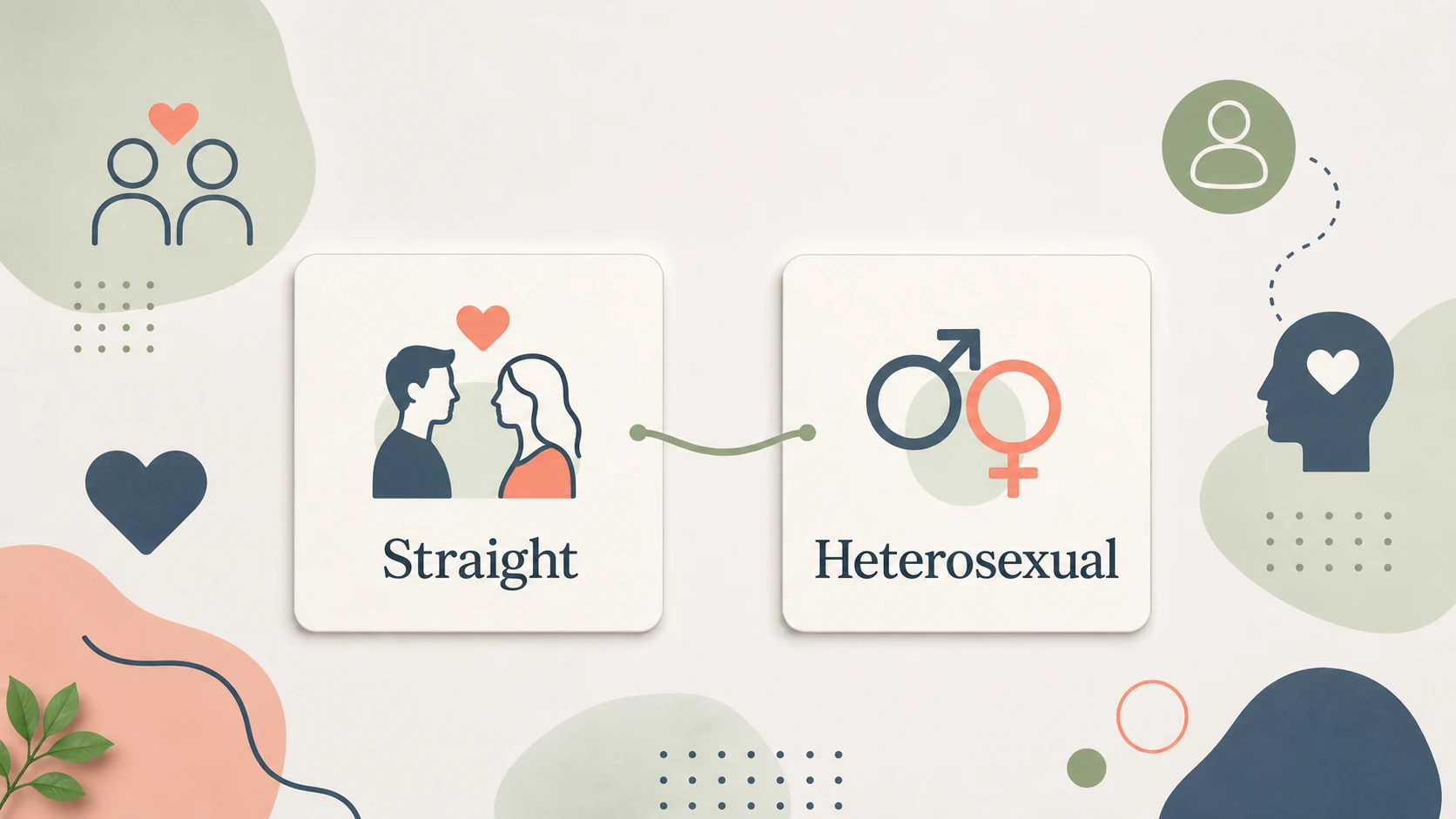
"Heterosexual" is the formal term. It comes from "hetero," meaning different, and refers to sexual attraction toward a different sex or gender. "Straight" is the informal everyday word. "Hetero" is a shortened version that people may use casually or in educational contexts.
In most modern conversations, straight and heterosexual point to the same broad idea. The difference is tone. Heterosexual sounds more clinical, academic, or demographic. Straight sounds more conversational and identity-based. For an educational article, it is useful to know both because people search for both "meaning of straight sexuality" and "meaning of straight sexual orientation."
There is one important nuance: straight can sometimes be used more broadly than sexual attraction. A person might use it to describe romantic attraction, dating patterns, or social identity. Heterosexual usually focuses more specifically on sexual orientation. If you are trying to understand your own label, a sexuality exploration tool can support reflection, but your own lived experience and comfort with language matter too.
Straight Gender Opposite: Why the Phrase Can Be Misleading
Many people search for "straight gender opposite" because they have heard that straight means attraction to the opposite gender. That phrasing is common, but it can be too narrow. It assumes there are only two genders and that everyone fits neatly into male or female categories. For many people, especially those who are cisgender and attracted to the other binary gender, the phrase feels understandable. For others, it does not describe their experience well.
A more careful definition is attraction to a different gender from one's own. This wording leaves more room for transgender, nonbinary, and gender-diverse people. It also avoids treating all gender as a strict two-option system.
This is also where "not straight meaning in gender" can become confusing. Not straight is not a gender identity. It usually means someone's sexual or romantic orientation is something other than straight, such as gay, lesbian, bisexual, pansexual, queer, asexual, or questioning. Gender identity is about who someone is. Sexual orientation is about who someone may be attracted to.
Straight Is About Orientation, Not Gender Identity
Straight and cisgender are often mixed up, but they describe different things. Cisgender means a person's gender identity aligns with the sex they were assigned at birth. Straight means a person's attraction is toward a different gender. A person can be cisgender and straight, cisgender and not straight, transgender and straight, transgender and bisexual, nonbinary and queer, or many other combinations.
This distinction matters because it helps people avoid assumptions. You cannot know whether someone is straight by looking at their clothes, voice, pronouns, or gender expression. You also cannot know whether someone is cisgender based only on who they date. Labels are most respectful when they are self-chosen.
If you are asking, "What does straight mean for a girl?" the basic answer is that a girl or woman who identifies as straight is generally attracted to boys or men. But that answer should not erase trans women, nonbinary people, or people whose attractions are more complex than one sentence can hold.
What Straight Means in a Relationship
In relationships, straight usually describes the orientation of one or both partners, not the quality of the relationship. A straight relationship is often used to mean a relationship between a man and a woman, especially when both identify as straight. But relationship language can be imprecise.
For example, a bisexual woman dating a man is not automatically straight. The relationship may look heterosexual from the outside, but her orientation is still hers to name. A transgender man dating a woman may describe the relationship as straight if that fits his identity and their shared language. A nonbinary person may or may not use straight relationship language at all.
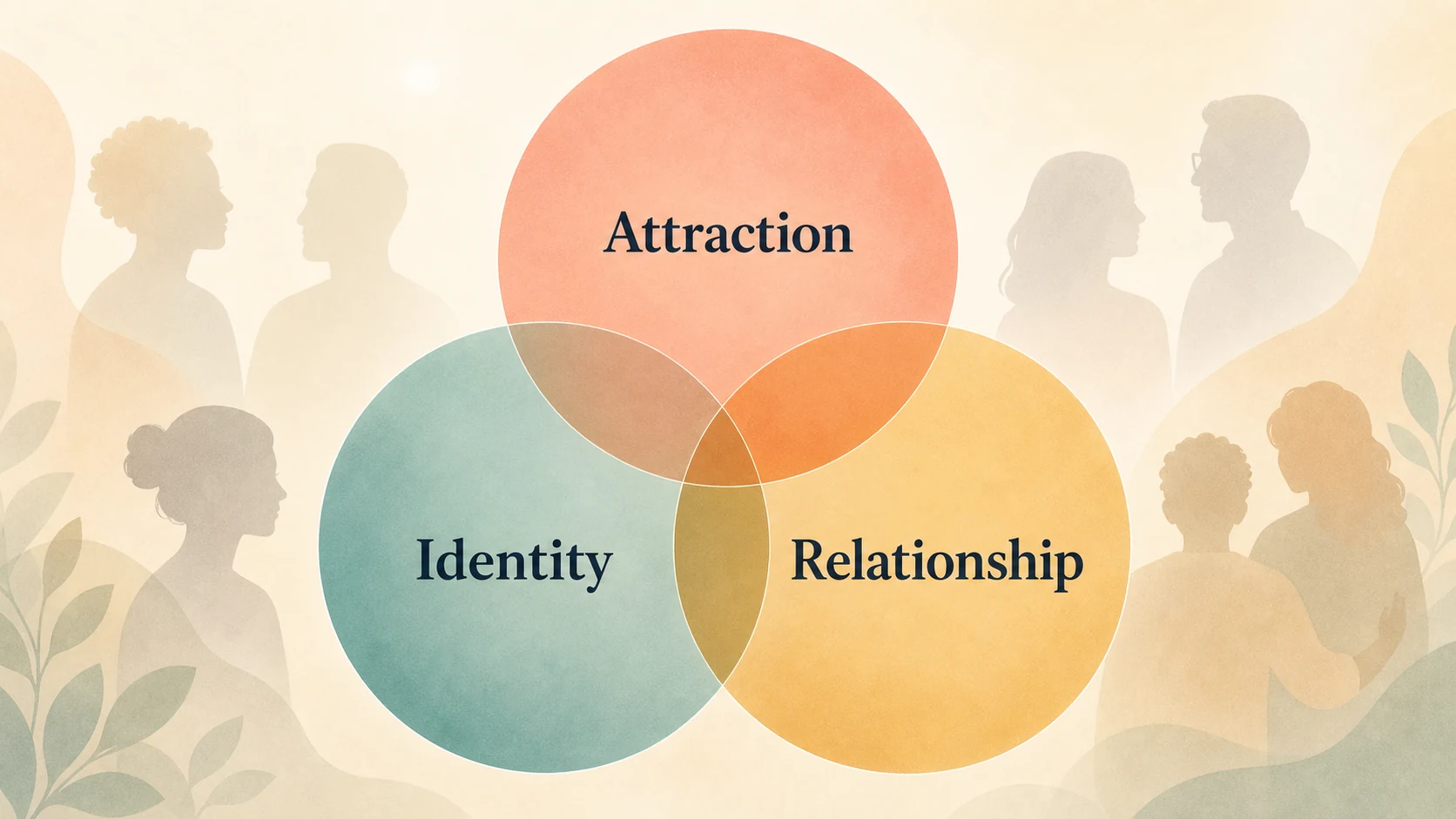
The safest approach is to separate three things:
- Attraction: who someone is drawn to emotionally, romantically, or sexually.
- Identity: the label someone chooses, such as straight, bisexual, queer, or questioning.
- Relationship context: who someone is currently dating or partnered with.
These can overlap, but one does not always prove the others.
Is Straight LGBTQ?
Straight people are usually not described as LGBTQIA+ simply because they are straight. LGBTQIA+ generally refers to people whose sexual orientation, gender identity, sex characteristics, or related experiences fall outside heterosexual and cisgender norms. However, a person can be straight and still be part of LGBTQIA+ communities for another reason. For example, a transgender person may be straight. Some intersex people may be straight. Some asexual people may have heteroromantic attraction and still identify with the asexual spectrum.
This is why the phrase "is straight LGBTQ" needs context. Straight alone does not usually mean LGBTQIA+. But straight does not automatically mean cisgender, non-LGBTQIA+, or disconnected from queer community. Identity is layered.
It is also possible to be a straight ally. An ally is someone who supports LGBTQIA+ people's dignity, rights, safety, and self-definition without claiming an identity that is not theirs. Allyship is about behavior and respect, not simply a label.
Why Is It Called Straight Sexuality?
The word straight became a common informal synonym for heterosexual over time. Historically, the word carried ideas of being conventional, proper, or on a "straight" path. That history is one reason some people dislike the term: it can seem to imply that other orientations are crooked or wrong. In modern everyday use, many people simply mean heterosexual when they say straight, without intending that judgment.
Still, language has history. Using straight carefully means remembering that no orientation is more valid, healthy, or normal than another. Heterosexuality is common, but common does not mean superior. Gay, lesbian, bisexual, pansexual, asexual, queer, questioning, and other orientations are also valid ways people experience attraction and identity.
The better question is not whether straight is the "right" word for everyone. It is whether the word helps a person describe their experience honestly and respectfully.
Heterosexuality and the Sexuality Spectrum
Some people experience straight attraction as clear and stable. Others may feel mostly straight, heteroflexible, questioning, or unsure. Some may use straight because it is the closest available word, even if it does not describe every feeling they have ever had.
Sexual orientation is often discussed as a spectrum because attraction can vary in direction, intensity, romantic meaning, sexual meaning, and identity. A spectrum does not mean every person must be fluid. It means human experience is broad enough that rigid boxes do not fit everyone equally well.
If you are wondering whether you are straight, not straight, or somewhere in between, try asking:
- Who do I feel drawn to romantically?
- Who do I feel drawn to sexually?
- Are my feelings occasional, lasting, situational, or recurring?
- Which label, if any, feels honest rather than forced?
- Do I feel pressure from family, culture, religion, or peers to choose one answer?
These questions are for self-understanding, not for forcing a label.
How to Reflect on Whether Straight Fits You
If the meaning of straight sexuality feels personal rather than abstract, give yourself room to move slowly. You do not need to solve your whole identity in one sitting. Start by noticing patterns without judging them. Write down what kinds of attraction you feel, what labels feel comfortable, and what labels feel restrictive.
It can also help to separate curiosity from identity. Wondering about someone of the same gender does not automatically require a new label. Having a same-gender crush might matter a lot, or it might be one part of a broader pattern. Feeling mostly attracted to a different gender may lead you to use straight, mostly straight, or no label at all.
When you want a structured way to think through attraction, a confidential sexuality test experience can offer prompts for reflection. It should be treated as educational support, not a final authority. If questions about sexuality are causing distress, conflict, or safety concerns, consider speaking with a qualified counselor, therapist, or trusted support person.

FAQ
What is the meaning of straight sexuality?
Straight sexuality means a person's romantic, emotional, and/or sexual attraction is generally directed toward a different gender. The formal term is heterosexual. The everyday term is straight.
Does heterosexual mean male or female?
No. Heterosexual does not mean male or female. It describes the direction of attraction. Men, women, transgender people, and some nonbinary people may use heterosexual or straight if the label fits how they understand their attraction.
What does straight mean for a girl?
For a girl or woman, straight usually means she is attracted to boys or men. The exact language can vary depending on her gender identity, the people she is attracted to, and the label she personally chooses.
Is straight the opposite of LGBTQ?
Not exactly. Straight is a sexual orientation label. LGBTQIA+ includes many sexual orientations and gender-related identities. A person may be straight and transgender, straight and intersex, or straight and an ally. Straight alone usually is not considered an LGBTQIA+ orientation.
What does not straight mean in gender?
Not straight is not a gender. It usually means a person does not identify as heterosexual or exclusively straight. Gender identity describes who someone is; sexual orientation describes who someone may be attracted to.
Why is it called straight sexuality?
Straight became a common informal word for heterosexual over time. Because the word has historical associations with being conventional or proper, some people prefer the more formal term heterosexual. In everyday use, many people use straight simply to mean attracted to a different gender.
Can someone be mostly straight?
Yes, some people use terms such as mostly straight, heteroflexible, or questioning when straight feels close but not complete. Others prefer not to label every nuance. The best label is one that feels accurate, respectful, and self-chosen.