Understanding Sexual vs. Romantic Attraction: Your Sexuality Test Journey
Are you feeling a disconnect between who you're physically drawn to and who you want to build a deep, emotional connection with? You're not alone. Many people exploring their identity find themselves asking if their sexual and romantic attractions are the same. This guide will clarify the distinct yet often intertwined concepts of sexual and romantic attraction, helping you navigate your unique feelings with confidence and self-acceptance. How do I know my sexuality when these feelings seem so complex? This journey of discovery is personal, and a confidential sexuality test can be a powerful first step. If you're looking for a safe space to reflect, you can explore your attractions with our confidential online tool.
What is Romantic Orientation? Unpacking Your Affections

Before diving into the differences, it’s crucial to understand what romantic orientation is on its own. It’s all about who you are drawn to emotionally, who you can imagine yourself in a romantic relationship with—cuddling, going on dates, and sharing your deepest thoughts and feelings. It’s the "who" that makes your heart flutter, separate from any physical desires. This emotional pull is a core part of how we connect with others.
Defining Romantic Attraction: Heart's Desire
Think of defining romantic attraction as identifying the gender or genders of people you could fall in love with. It's about an emotional and intellectual connection that creates a desire for partnership. This feeling isn't necessarily tied to sexual intimacy. For some, a deep, loving bond is the primary goal in a relationship, and this is where romantic orientation comes into focus. It’s about whose personality, presence, and companionship you crave on an intimate, non-physical level. Understanding this can feel like finding a key piece of your personal puzzle. For many, taking a sexual preference test helps clarify these feelings.
Exploring Different Types of Romantic Attraction
Just like sexual orientation, romantic attraction exists on a vast spectrum. The language we use to describe it helps validate these diverse experiences. For example, a person might identify as homoromantic (romantically attracted to the same gender), heteroromantic (romantically attracted to a different gender), biromantic (romantically attracted to two or more genders), or panromantic (romantically attracted to people regardless of their gender). There's also aromanticism, which we'll explore more deeply. Recognizing these types of attraction helps us appreciate that our hearts can have different inclinations than our bodies.
Sexual Attraction vs. Romantic Attraction: A Clear Distinction
Let's get to the heart of it: the difference between romantic and sexual attraction. Sexual attraction is the desire for physical or sexual contact with another person. It's the spark of physical chemistry, the longing for intimacy on a bodily level. Romantic attraction, as we've discussed, is about emotional connection and the desire for a romantic relationship. For many people, these two align perfectly. They are sexually and romantically attracted to the same people. However, for many others, they don't.
Understanding the Split Attraction Model (SAM)
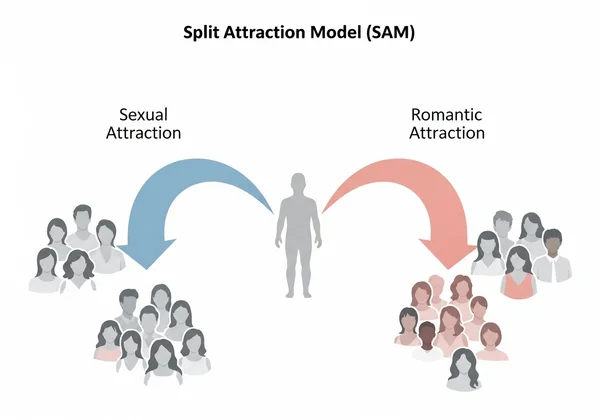
The Split Attraction Model (SAM) is an incredibly useful framework for understanding this distinction. It proposes that sexual and romantic attraction are separate components of a person's overall orientation. This model is particularly valued in asexual and aromantic communities but is helpful for everyone. Using the SAM, someone might identify as bisexual and homoromantic, meaning they are sexually attracted to people of multiple genders but only romantically interested in people of the same gender. The SAM isn’t a rigid rulebook but a tool that provides the language to describe complex personal experiences accurately and without judgment. Using a framework like the sexuality spectrum test can help you apply the SAM to your own feelings.
When Your Attractions Don't Align: Validating Common Experiences
If you've ever felt confused because your crushes and your physical attractions don't seem to match, please know your experience is completely valid. It is not uncommon for someone's sexual and romantic orientations to differ. This misalignment doesn't make you broken or confused; it simply makes you human. Our feelings are layered and nuanced. Allowing yourself the grace to accept that your romantic and sexual attractions can point in different directions is a profound act of self-acceptance and a critical step in your personal growth. If you are questioning, "what sexuality am I?", remember that exploring these feelings with a sexual identity test can helpful tool provide valuable clarity.
Aromanticism Explained: Living Without Romantic Attraction
One of the most important identities to understand in this discussion is aromanticism, which refers to experiencing little to no romantic attraction to others. An aromantic person doesn't "fall in love" in the traditional sense and may not desire a romantic relationship. This is a valid romantic orientation, just like being homoromantic or panromantic. It's important to remember that being aromantic doesn't mean you're 'loveless' or 'heartless'.
Dispelling Common Myths About Aromantic Identity

A common myth is that people with an aromantic identity cannot feel love. This is untrue. Aromantic individuals can feel deep, meaningful love for family and friends (platonic love) and form powerful, committed relationships that are not based on romance. They can also still experience sexual attraction. Another misconception is that aromanticism is a phase or a result of trauma; for most, it is an innate orientation. Recognizing and respecting aromanticism is vital for creating a truly inclusive understanding of human connection.
Support and Resources for Aromantic Individuals and Allies
For those who identify as aromantic or are questioning if they might be, finding community and information is key. Online forums, blogs, and organizations dedicated to asexuality and aromanticism offer incredible support. For allies, the best thing you can do is listen, learn, and affirm the experiences of your aromantic friends. Understanding that not everyone desires romance helps to challenge societal norms and creates a more accepting world for all types of relationships and connections. This journey of self-discovery is unique for everyone, and resources like an online sexuality test can be a private first step.
Navigating Your Unique Attractions: How a Sexuality Test Can Help
So, where do you go from here? Understanding these concepts is the first step, but applying them to your own life is the real journey. It requires patience, kindness toward yourself, and a willingness to explore your feelings without pressure or expectation. This path is yours and yours alone, and there is no right or wrong way to walk it.
The Power of Self-Reflection and Open Exploration
Give yourself permission to engage in self-reflection. Journaling can be a fantastic way to untangle your thoughts. Ask yourself questions like: Who do I enjoy spending my time with? Who do I fantasize about, and are those fantasies romantic or sexual? What does an ideal relationship look like to me? There are no deadlines for these answers. The goal isn't to find a perfect label overnight but to foster a deeper, more honest relationship with yourself. Allow your understanding to be fluid; it may change over time, and that's perfectly okay.
How Our Online Sexuality Test Can Guide Your Reflective Journey

Sometimes, a structured approach can help organize your thoughts. That’s where our free sexuality test comes in. Our confidential, science-informed sexuality test is designed as a tool for self-discovery. By answering a series of carefully crafted questions, you can see patterns in your attractions that you might not have noticed before. It’s not about getting a definitive label but about gaining personalized insights to guide your reflective journey. Think of our sexuality quiz as a compass, offering direction as you navigate your inner world. Ready to gain deeper insights?
Embracing Your Full Spectrum of Attraction
Understanding the difference between sexual and romantic attraction is liberating. It gives you the language to describe your unique experience and validates that your feelings, whatever they may be, are real and worthy of respect. Your identity is a rich tapestry woven from many threads, and your attractions are just one part of that beautiful picture.
Embrace your complexity. Whether your attractions align perfectly or exist on different spectrums, your journey is valid. Continue to learn, reflect, and be gentle with yourself. If you're ready to take another step on your path of self-discovery, we invite you to start your journey with our free sexuality test.
Frequently Asked Questions About Sexual & Romantic Attraction
What's the key difference between sexual and romantic orientation?
The key difference is the nature of the attraction. Sexual orientation relates to who you are physically and sexually drawn to. Romantic orientation relates to who you are emotionally drawn to and with whom you desire a romantic relationship. One is about physical desire, the other about emotional connection.
Can my romantic orientation be different from my sexual orientation?
Absolutely. This is a common and valid experience, often described using the Split Attraction Model. For example, you could be asexual (feel no sexual attraction) but biromantic (feel romantic attraction to more than one gender). Your unique combination is a valid part of your identity.
Is it normal to feel confused about these different types of attraction?
Yes, it is completely normal. Society often presents sexual and romantic attraction as one and the same, so realizing they can be separate for you can be confusing. Be patient with yourself. This confusion is often a stepping stone to greater self-awareness and clarity.
How can this sexuality test help me understand my attractions better?
Our platform offers a private, reflective space to explore your feelings. The online sexuality test questions are designed to help you think about different facets of attraction. The results provide a summary based on your answers, offering insights that can serve as a starting point for deeper self-understanding. It’s a tool to help you connect the dots in your own experience. You can take our free sexuality test anytime.
Where can I find more resources if I identify as aromantic?
While we can't link to external sites, great resources exist. Searching online for "Aromantic-spectrum Union for Recognition, Education, and Advocacy" (AUREA) or the "Asexuality Visibility and Education Network" (AVEN) will lead you to communities and information dedicated to aromantic and asexual experiences. These platforms provide support, definitions, and a sense of community.