What Is Sexual Orientation: A Complete Guide to Understanding Your Identity
Figuring out who you are attracted to can be one of the most complex and personal journeys you will ever undertake. You might feel sure about your feelings one day, only to feel confused the next. Please know that this uncertainty is completely normal. Sexual orientation is a core part of who you are, but understanding it often takes time, patience, and self-reflection.
This guide is here to help you navigate these feelings without judgment. We will explore what sexual orientation really means, how it differs from gender, and the vast spectrum of identities that exist. By the end of this article, you will have a clearer framework to understand your own experiences. If you are looking for a starting point, many people find that taking a sexual orientation test can help clarify their thoughts and provide a baseline for self-discovery.
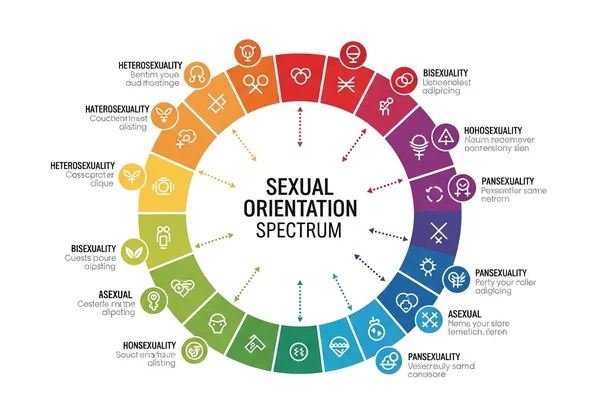
Defining Sexual Orientation: More Than Just Labels
At its core, sexual orientation describes who you feel a lasting emotional, romantic, or sexual attraction to. However, it is rarely as simple as checking a box. To truly understand your orientation, it helps to break it down into distinct layers.
Many experts view orientation through three interacting pillars:
- Attraction: This refers to your internal feelings and desires. Who do you find yourself thinking about or feeling drawn to?
- Behavior: This refers to your actual sexual experiences. Who have you been intimate with?
- Identity: This is the label you choose to use for yourself (e.g., gay, bisexual, straight).
The 3 Pillars: Attraction, Behavior, and Identity
It is important to recognize that these three pillars do not always align perfectly. For example, you might experience attraction to the same gender but have not acted on it (Attraction does not equal Behavior). Alternatively, you might have had past experiences with the opposite gender but identify as gay (Behavior does not equal Identity).
Your internal sense of attraction is usually the most accurate indicator of your sexual orientation. Identity is simply the language you use to communicate that truth to the world.
Orientation vs. Behavior: Why Actions Don't Always Match Feelings
A common source of anxiety is the belief that a single action defines you forever. For instance, if a man has a sexual experience with another man, does that automatically make him gay? Not necessarily.
Sexual experimentation is a normal part of human development. Your orientation is defined by consistent patterns of attraction, not by isolated events. Therefore, focus on your enduring feelings rather than a specific history of actions.
The Split Attraction Model: When Romance and Sex Differ
Did you know that who you want to date might be different from who you want to sleep with? This concept is known as the Split Attraction Model.
- Sexual Attraction: A desire for sexual contact with someone.
- Romantic Attraction: A desire for emotional intimacy and a relationship with someone.
For some people, these align perfectly. For others, they split. For example, a person might be asexual (experiences no sexual attraction) but heteroromantic (desires romantic relationships with the opposite gender). Understanding this distinction can resolve a lot of confusion regarding your identity.
Sexual Orientation vs. Gender Identity: Clearing the Confusion
One of the most frequent misunderstandings is mixing up sexual orientation with gender identity. While they are both parts of the LGBTQIA+ acronym, they refer to completely different aspects of your selfhood.
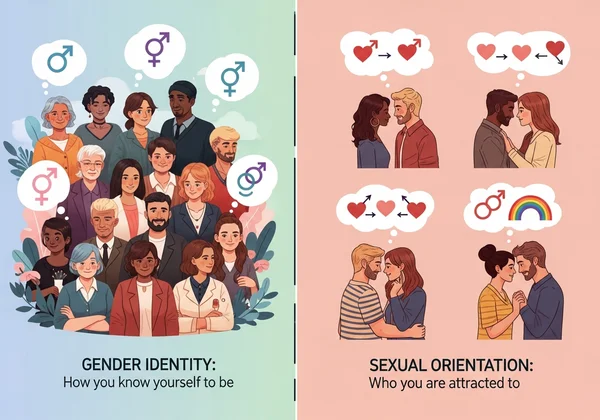
Who You Are (Gender) vs. Who You Love (Orientation)
Think of it this way:
- Gender Identity is about who you go to bed as (e.g., man, woman, non-binary).
- Sexual Orientation is about who you go to bed with (or who you are attracted to).
Your gender identity is your internal sense of being male, female, or something else. In contrast, your orientation is about the direction of your desire.
How They Intersect: Can You Be Trans and Gay?
Yes, absolutely. Because these are separate traits, they can combine in any number of ways. A transgender woman (who was assigned male at birth but identifies as a woman) who is attracted to other women is a lesbian. A non-binary person who is attracted to people of all genders might identify as pansexual.
Separating these concepts is crucial for clear self-discovery. You do not need to figure out both at the exact same time.
Types of Sexual Orientation: Exploring the Spectrum
Human sexuality is rarely black and white. Instead, it exists on a broad spectrum. Understanding the specific types of sexual orientation can help you find words that resonate with your experience. Here are the most common categories.
Monosexual Identities: Gay, Lesbian, and Heterosexual
These terms describe attraction primarily to one gender.
- Heterosexual (Straight): Attraction to a gender different from your own.
- Gay: Attraction to the same gender (often used by men).
- Lesbian: A woman who is attracted to other women.
Multisexual Identities: Bisexual, Pansexual, and Polysexual
These terms describe attraction to more than one gender.
- Bisexual: Attraction to your own gender and other genders. This does not necessarily mean "50/50" attraction; preferences can lean one way.
- Pansexual: Attraction to people regardless of their gender. For pansexual individuals, gender is often not a factor in attraction at all.
- Polysexual: Attraction to multiple, but not necessarily all, genders.
The Asexual Spectrum: Ace, Demi, and Gray-A
This part of the spectrum relates to the intensity or conditions of attraction.
- Asexual (Ace): Experiencing little to no sexual attraction to anyone.
- Demisexual: Experiencing sexual attraction only after forming a strong emotional bond.
- Gray-asexual: Experiencing attraction rarely, or only under specific circumstances.
Is Sexual Orientation Fluid? (Understanding Changes)
You might be asking, "I used to feel one way, but now I feel different. Is something wrong with me?" The short answer is no. Nothing is wrong.
The Science of Sexual Fluidity
Research increasingly supports the idea of sexual fluidity. This means that for some people, the capacity for sexual response and attraction can shift over time.
You might identify as straight for years, and then find yourself attracted to a specific person of the same gender later in life. Alternatively, you might identify as bisexual but go through periods where you are only interested in one gender. This fluidity is a natural variation of human sexuality, not a sign of instability.
Navigating the "Questioning" Phase
If you are currently questioning your identity, try not to panic.
- Pause: Do not force a label immediately.
- Observe: Notice your feelings without judgment.
- Accept: Allow yourself to be "Questioning" for as long as you need. It is a valid identity in itself.
How to Know Your Sexual Orientation? (Self-Discovery)
Determining your sexual orientation is a process of connecting the dots between your feelings, fantasies, and experiences. There is no blood test for this, but structured self-reflection can provide clarity.
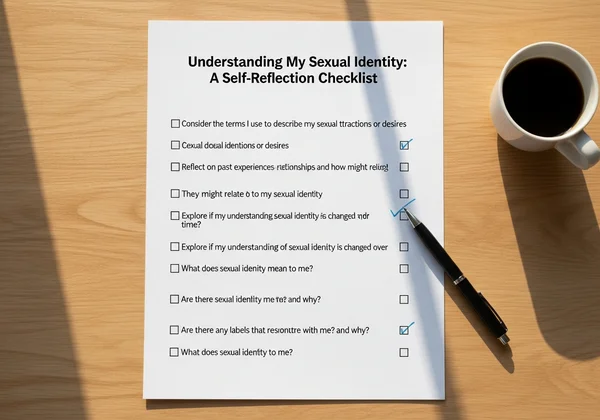
5 Key Questions to Ask Yourself
Find a quiet space and honestly answer the following questions. Focus on your feelings, not just your past actions.
- The "Crush" Test: When you think back on people you have had crushes on, is there a gender pattern?
- The Fantasy Factor: When you daydream or have romantic fantasies, who are the people involved?
- The "Ideal Future": If you imagine a long-term partner sitting next to you on a couch in 10 years, does that person have a specific gender?
- Emotional Safety: With whom do you feel the deepest emotional connection and vulnerability?
- Physical Reaction: Who draws your eye in a crowd?
Why There is No "Rush" to Label Yourself
In our society, there is a lot of pressure to "come out" or define yourself quickly. However, labels are meant to serve you, not trap you. You are allowed to try on a label like "bisexual" to see if it fits, and change it later if "pansexual" feels more accurate. Your label is a tool for communication, and you have the right to update it as you learn more about yourself.
Need More Clarity? Use an Educational Tool
Sometimes, our thoughts can feel like a tangled knot. It can be difficult to see patterns when you are inside the experience. In these moments, using an objective tool can help organize your reflections.
If you want a safe, private way to explore these traits further, you can try our sexual orientation test online. This tool is designed to ask you the right questions to help you reflect on your preferences. While no online quiz can provide a clinical diagnosis, it can act as a helpful mirror to better understand where you might fall on the spectrum.
Embracing Your Authentic Self
Ultimately, sexual orientation is about love, connection, and authenticity. Whether you are straight, gay, ace, or somewhere in between, your identity is valid.
Remember that you are the only expert on your own life. Take your time exploring the spectrum and listen to your internal compass. If you are still exploring, using a comprehensive sexual orientation guide or assessment is just one step in your journey. Use the results as a conversation starter with yourself, and embrace the freedom of discovering who you truly are.
Frequently Asked Questions
Is sexual orientation determined by genetics or environment?
Most scientists and major medical organizations agree that sexual orientation is likely caused by a complex interaction of biological, hormonal, and environmental factors. It is not something you can choose, nor is it something you can change through therapy.
Can I be romantic with someone without wanting sex?
Yes. As explained by the Split Attraction Model, you can have a romantic orientation that differs from your sexual orientation. For example, you might enjoy cuddling and dating (romantic attraction) but have no interest in sexual intimacy (asexual).
What if I don't fit into any of the common labels?
That is perfectly okay. Many people use umbrella terms like "Queer" or simply describe themselves as "fluid" or "unlabeled." Labels are tools for you to use; you do not have to fit into a pre-existing box if it doesn't feel right.
At what age do most people know their sexual orientation?
There is no set age for discovering your orientation. Some people know from a very young age (before puberty), while others may not realize or accept their orientation until adulthood or even later in life. Everyone’s timeline is different.