What Is Straight Sexual Orientation? Meaning, Synonyms, and History
What is straight sexual orientation? In everyday language, it usually means heterosexual orientation: a pattern of romantic, emotional, and/or sexual attraction toward people of a different gender. Many people simply say "straight," while others prefer "heterosexual" because it sounds more precise and less loaded. Both words can describe real attraction, but neither word should be treated as the only normal way to be. If you are comparing terms or reflecting on your own attractions, a confidential sexuality self-reflection tool can offer a private starting point without forcing a label.

What Straight Sexual Orientation Means
Straight sexual orientation is most commonly called heterosexuality. A heterosexual, or straight, person is generally attracted romantically, emotionally, sexually, or relationally to people of a gender different from their own. For example, a man who is attracted to women may describe himself as straight; a woman who is attracted to men may do the same.
That simple definition is helpful, but it is not the whole story. Sexual orientation is about attraction patterns, not one isolated feeling, one relationship, or one moment of curiosity. Someone might identify as straight because their consistent pattern of attraction is toward another gender, even if they can recognize beauty, closeness, or admiration in many people.
It also helps to separate sexual attraction from romantic attraction. Some people experience both together. Others may feel romantic attraction in one direction and sexual attraction differently, rarely, or not at all. This is why terms such as heteroromantic, asexual, aromantic, bisexual, gay, lesbian, pansexual, queer, and questioning can matter. They give people more careful language for experiences that a single word may not fully describe.
In LGBTQ+ conversations, "straight person meaning" usually refers to someone whose orientation is not gay, lesbian, bisexual, pansexual, queer, or another minority sexual orientation. That does not mean straight people are outside all conversations about identity. It means straightness is one orientation among many, and it often carries social visibility because many cultures assume heterosexuality by default.
Straight, Heterosexual, and Other Synonyms
If you are asking what straight sexual orientation is called, the most precise common answer is heterosexual. The noun is heterosexuality. The adverb is heterosexually, as in "a person who is heterosexually attracted to women." In casual speech, straight is the familiar synonym.
There are also related phrases that may appear in search results or education materials. "Opposite-gender attracted" is sometimes used, but it can sound too binary because gender includes more than only men and women. "Different-gender attracted" is often more inclusive. "Heteroromantic" describes romantic attraction toward a different gender, which may or may not match sexual attraction. "Allosexual" describes a person who experiences sexual attraction, and it is often contrasted with asexual identities, but it does not mean straight.
Some people use "cishet" to mean cisgender and heterosexual. A cisgender man, cis male, cis guy, cisgender woman, or cis woman is someone whose gender identity aligns with the sex they were assigned at birth. A person can be cisgender and straight, cisgender and queer, transgender and straight, transgender and gay, or many other combinations. Gender identity and sexual orientation are connected in social conversation, but they answer different questions.
The word "straight" itself can feel comfortable to some people and uncomfortable to others. Critics point out that "straight" can imply a correct path, which may unintentionally make other orientations sound like deviations. Many people still use it neutrally, but inclusive writing often pairs it with "heterosexual" and avoids implying that any orientation is more valid than another. For readers who want gentle language around attraction, a private sexuality exploration space can support reflection without treating labels as final verdicts.
Straight Is a Sexual Orientation, Not a Gender
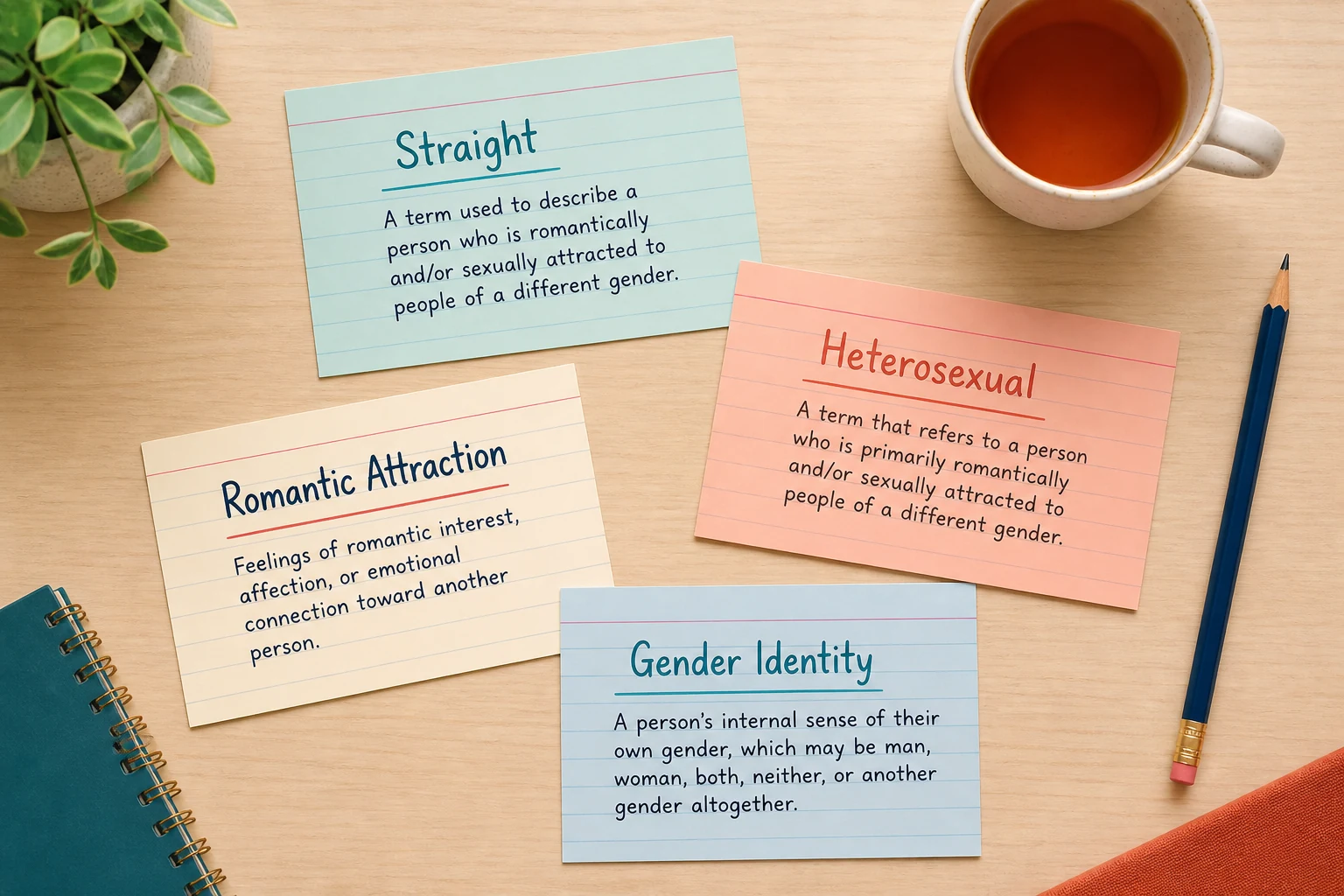
One common search phrase is "straight gender opposite," but straight is not a gender. It is a sexual orientation. Gender describes a person's internal sense of being a man, woman, nonbinary person, genderqueer person, or another gender. Sexual orientation describes patterns of attraction.
This distinction matters because a straight person does not have to be cisgender. A transgender man who is attracted to women may identify as straight. A transgender woman who is attracted to men may identify as straight. A nonbinary person might use straight, queer, bisexual, or another term depending on how they understand their gender and attraction. The right word is the one that fits the person's own experience.
"What is your sexual orientation for man?" is another search pattern that can mean several things. If the question is about a man attracted to women, straight or heterosexual may fit. If it is about a man attracted to men, gay may fit. If it is about attraction to more than one gender, bisexual, pansexual, or queer may fit. If sexual attraction is rare or absent, asexual spectrum language may fit. The point is not to force one category onto someone, but to describe attraction respectfully.
Relationship status also does not decide orientation. A straight person meaning in a relationship usually refers to someone in a different-gender relationship, but a relationship does not always tell the full story. Someone may be in a different-gender relationship and identify as bisexual. Someone may be single and straight. Someone may be questioning while dating. Identity is more personal than an outside observer's guess.
A Short History of Heterosexuality
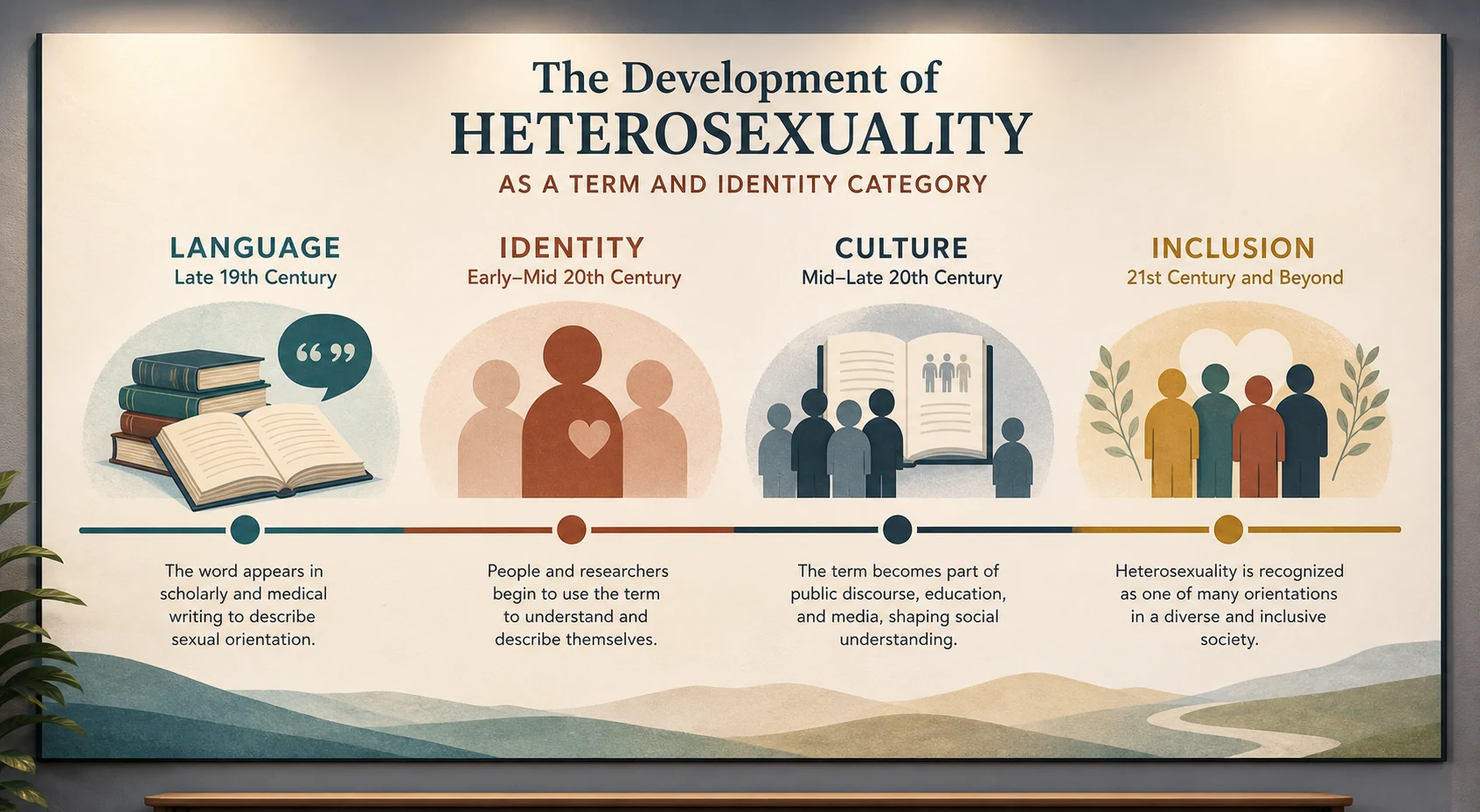
The history of heterosexuality is not just the history of different-gender attraction. People have formed different-gender partnerships throughout human history, but the word "heterosexual" is relatively modern. In the late nineteenth and early twentieth centuries, medical, legal, religious, and psychological writers began sorting human desire into named categories. Over time, heterosexuality became the term for attraction toward a different sex or gender, while homosexuality became the term for same-sex attraction.
This naming history matters because labels do social work. Once a word exists, people can use it to explain themselves, build communities, write laws, challenge stigma, or create stereotypes. Heterosexuality was often treated as the assumed default, especially in cultures built around marriage between men and women. That assumption is what many people mean by heteronormativity: the idea that straight relationships are expected, centered, or treated as the standard.
Today, many educators define sexual orientation in a broader and more person-centered way. Instead of presenting straight and gay as the only two options, they describe a spectrum of attraction. That spectrum can include heterosexual, gay, lesbian, bisexual, pansexual, asexual, queer, questioning, and other identities. The spectrum idea does not erase straightness. It simply places straight sexual orientation beside other valid ways people experience attraction.
There is no single "straight sexual flag" that has the same cultural role as widely recognized Pride flags. Some straight ally or heterosexual pride designs circulate online, but they do not have one universally accepted meaning. When discussing flags, it is best to be specific about whether you mean a heterosexual symbol, a straight ally flag, or a Pride flag connected to LGBTQ+ support.
How to Know Whether Straight Fits You
For some people, "straight" is obvious and ordinary. For others, it is a question they revisit over time. You might ask whether the label fits by noticing patterns rather than trying to solve everything in one sitting.
Consider who you tend to feel drawn to romantically, sexually, emotionally, or physically. Notice whether those patterns have been stable, flexible, rare, or confusing. Think about whether "straight," "heterosexual," "mostly straight," "heteroflexible," "bisexual," "queer," "asexual," or "questioning" gives you more relief, accuracy, or room to breathe. You do not have to announce a label just because you are exploring it privately.
It can also help to separate pressure from preference. Some people assume they are straight because family, school, faith communities, media, or local culture presented it as the default. Others genuinely are straight and may still care deeply about LGBTQ+ inclusion. Both realities can exist. The useful question is not "Which label should I perform for other people?" but "Which description helps me understand my actual attractions with honesty and kindness?"
If your feelings include fear, shame, or distress, move gently. You are allowed to take time, read, journal, talk with a trusted person, or seek support from an affirming counselor. Educational articles and online tools can support reflection, but they should not replace professional care when you need help with safety, trauma, anxiety, family conflict, or serious emotional strain.
A Gentle Next Step for Understanding Straight Sexual Orientation
Understanding what is straight sexual orientation can be surprisingly useful even if you already identify as straight. It clarifies the difference between orientation and gender, explains why heterosexual and straight are related but not identical in tone, and helps you speak more respectfully about LGBTQ+ and non-LGBTQ+ experiences.
If you are exploring your own label, keep the process low-pressure. You might write down moments of attraction, relationship hopes, comfort with different words, and questions you want to revisit later. A label can be a helpful map, but it does not have to become a cage. If a word feels useful, use it. If it stops fitting, you can keep learning.
For a private, educational next step, you can review your attraction patterns at your own pace. The goal is not to force certainty. It is to create a calmer space for reflection, language, and self-understanding.

FAQ
What is straight sexual orientation called?
Straight sexual orientation is commonly called heterosexuality. A person who is straight or heterosexual usually experiences romantic, emotional, and/or sexual attraction toward people of a different gender.
Is heterosexual the same as straight?
In most everyday contexts, yes. "Heterosexual" is the more formal term, while "straight" is the casual term. Some people prefer heterosexual because "straight" can carry cultural assumptions about what is considered normal.
Why is it called straight?
The exact everyday history is complex, but "straight" became a common slang term for heterosexual people. Some critics dislike it because the word can imply a correct or proper path. Inclusive language avoids using straightness as a standard that other orientations are measured against.
What is another word for sexual orientation?
Related phrases include sexuality, orientation, attraction pattern, romantic orientation, and sexual identity. They are not always perfect synonyms, so context matters. Sexual orientation usually focuses on who someone is attracted to, while sexual identity may include the label a person chooses.
Can a straight person be LGBTQ+?
A straight cisgender person is usually not described as LGBTQ+ based on orientation or gender identity alone, though they can be an ally. A straight transgender person may be part of LGBTQ+ communities because transgender is a gender identity, not a sexual orientation.
What is asexual, and is it the opposite of straight?
Asexual means someone experiences little or no sexual attraction, or experiences it in a specific or uncommon way depending on where they are on the asexual spectrum. It is not simply the opposite of straight. A person can be asexual and still have romantic attraction, including heteroromantic attraction.
What do zedsexual and horosexual mean?
These terms are not widely used mainstream orientation labels. If you see unfamiliar sexuality terms online, check whether they are community-recognized, personal, humorous, outdated, or niche before applying them to yourself or someone else.