The Kinsey Scale Test: A Scientific Approach to Discovering Your Sexuality
Understanding your own feelings of attraction can sometimes feel like trying to navigate a maze without a map. For decades, society operated under the strict assumption that everyone was either entirely heterosexual or entirely homosexual. But human sexuality is rarely that simple. Today, we know that attraction exists on a vast, intricate spectrum.
This profound shift in how we understand human desire didn't happen overnight. It began with groundbreaking research in the mid-20th century that introduced the world to the Kinsey scale. By replacing the rigid "gay or straight" binary with a sliding scale of attraction, scientists finally gave millions of people a framework to understand their complex feelings. Let's explore what the classic scale means, how it revolutionized psychology, and why taking a modern sexuality test is the best next step for your personal self-discovery journey.
What is the Kinsey Scale? Understanding the Spectrum
The Kinsey scale, also known as the Heterosexual-Homosexual Rating Scale, is a classic psychological model used to describe a person's sexual orientation at a given point in time. It was revolutionary because it was one of the first scientific models to suggest that sexuality is not a stark "either/or" choice, but rather a continuous fluid line—a kinsey sexuality spectrum.
Instead of forcing individuals to choose between two strict boxes, the scale evaluates a person's behavior, fantasies, and attractions, placing them on a continuum.
Who was Alfred Kinsey?
The scale was created by Dr. Alfred Kinsey, a pioneering biologist and sexologist. The Alfred Kinsey research conducted at Indiana University in the 1940s and 50s involved thousands of in-depth interviews with everyday people about their sexual histories. Kinsey sought to document what people were actually doing behind closed doors, independent of society's moral expectations at the time.
How the 0 to 6 Kinsey Scale Works (Breaking Down the Numbers)
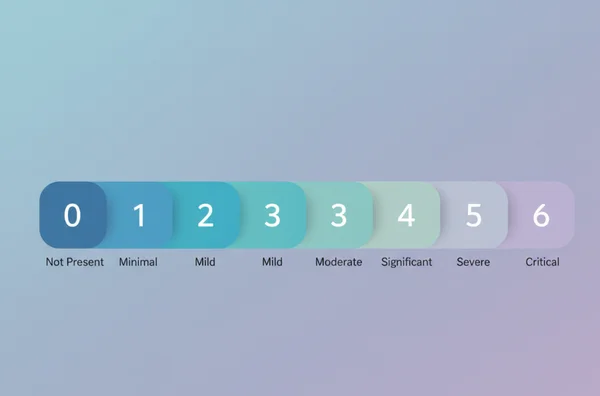
To categorize the massive amount of data his team collected, Kinsey developed a simple rating system from 0 to 6, along with an additional "X" category. Here is how the scoring breaks down:
- 0: Exclusively heterosexual (attracted only to the opposite sex).
- 1: Predominantly heterosexual, only incidentally homosexual.
- 2: Predominantly heterosexual, but more than incidentally homosexual.
- 3: Equally heterosexual and homosexual (what is often described today as bisexual).
- 4: Predominantly homosexual, but more than incidentally heterosexual.
- 5: Predominantly homosexual, only incidentally heterosexual.
- 6: Exclusively homosexual (attracted only to the same sex).
- X: No socio-sexual contacts or reactions (an early recognition of what we now understand as asexuality).
The Impact of the Kinsey Reports on Human Sexuality
When the "Kinsey Reports" (Sexual Behavior in the Human Male in 1948 and Female in 1953) were published, they sent shockwaves through the world. The data revealed that a significant portion of the population did not fit neatly into the "0" or "6" categories. Many people fell somewhere in between, experiencing varying degrees of same-sex and opposite-sex attraction throughout their lives.
By putting scientific data behind the idea of sexual fluidity, Kinsey's work helped lay the psychological groundwork for the modern LGBTQ+ rights movement, removing the stigma from those who felt they didn't "fit in."
Is the Kinsey Scale Still Accurate Today? (Modern Limitations)
While the Kinsey scale was incredibly progressive for its time, psychology and sexology have evolved significantly over the last 70 years. If you take a classic kinsey scale test today, you might quickly notice its limitations.
First, the original scale heavily conflated sexual behavior with romantic attraction, whereas modern science recognizes that who you want to sleep with and who you want to fall in love with can be different (the split attraction model). Second, the scale was built on a strict gender binary (male/female), failing to account for attractions to non-binary or transgender individuals, or identities like pansexuality. Finally, human sexuality is often fluid over a lifetime, and a single number rarely captures the rich, emotional depth of your identity.
Beyond Kinsey: Taking a Modern Sexuality Test
Because of these historical limitations, relying on an outdated kinsey scale quiz might leave you feeling more confused than validated. If you are questioning your attractions today, you need a tool built on contemporary, inclusive psychological science.
A modern sexuality assessment moves beyond the simple 0-to-6 rating. It considers romantic orientation, emotional connection, and respects the entire gender spectrum. It asks nuanced questions designed to act as a mirror for your deepest feelings, providing clarity without forcing you into an archaic box.
Ready to discover where you fall on the modern spectrum of attraction? Start Your Confidential Sexuality Test
How Our AI-Powered Insights Go Deeper Than a Single Number

Determining your orientation is just the first step in a much larger journey of self-acceptance. A simple score cannot tell you how to navigate a new relationship, how to process confusing fantasies, or how to embrace your identity with confidence.
This is where advanced technology bridges the gap. By leveraging state-of-the-art AI, modern tests can analyze the unique context of your answers to provide a deeply personalized insight report. Rather than just handing you a label, you receive actionable guidance, an analysis of your strengths, and a compassionate roadmap for your personal well-being.
Don't just get a score—get a personalized understanding of your unique identity. Get Your Dedicated Insights Report
Frequently Asked Questions
What does a 3 on the Kinsey scale mean?
A score of 3 on the classic Kinsey scale indicates that a person is equally attracted to both the opposite sex and the same sex. In modern terminology, this closely aligns with bisexuality, though contemporary definitions of bisexuality often include attraction to more than just two genders.
Is the classic Kinsey test inclusive of all gender identities?
No. Because the original research was conducted in the 1940s, the model assumes a strict male/female gender binary. It does not account for attraction to non-binary, genderqueer, or transgender individuals. This is why modern, inclusive sexuality tests are highly recommended over relying solely on historical scales.
Disclaimer: This article and the linked tests are designed for educational purposes, self-reflection, and personal exploration. They do not constitute a clinical diagnosis. If you are experiencing distress regarding your sexuality or identity, please consult a qualified mental health professional.